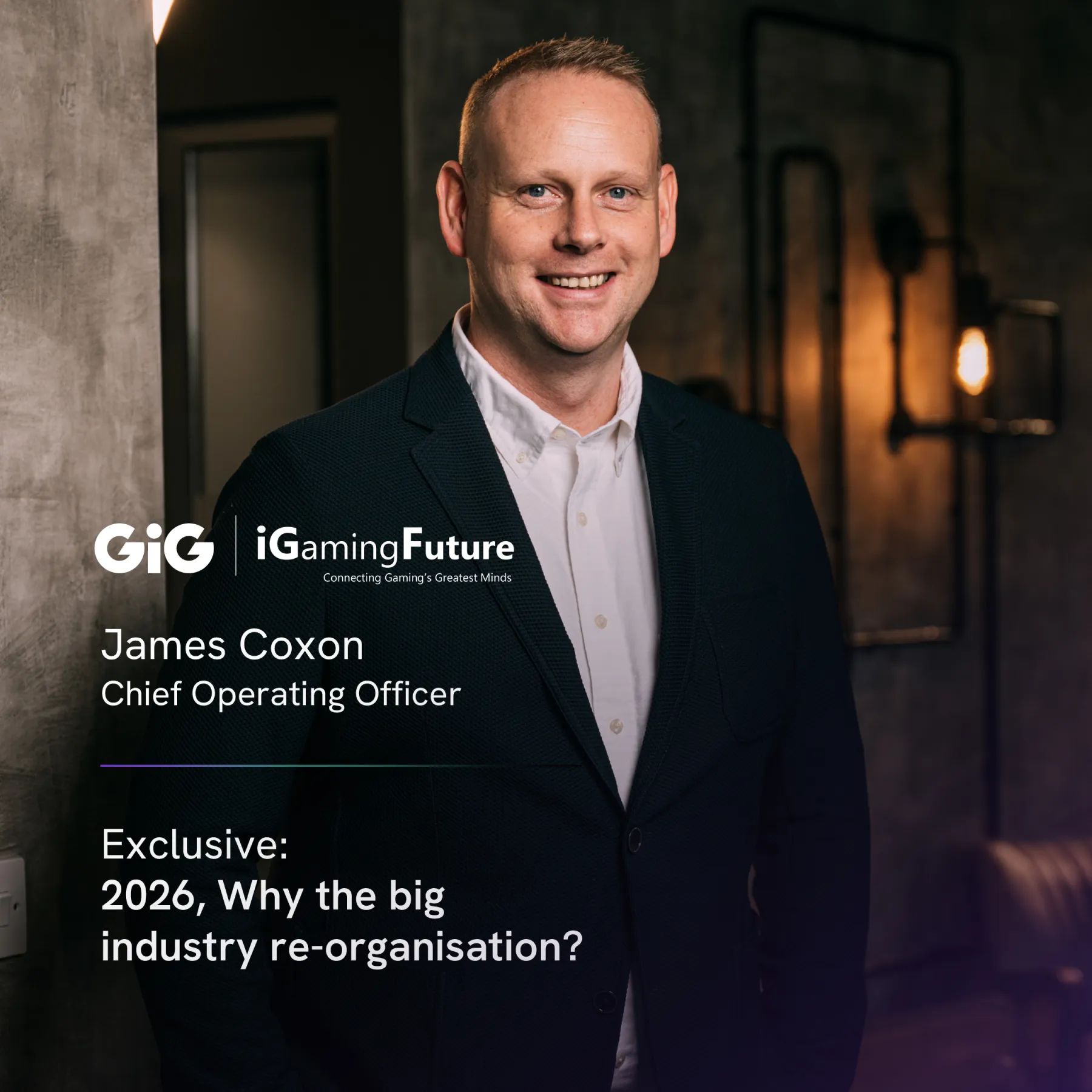
By James Coxon, COO.
(post originally published in iGaming Future)
From our perspective, this cycle was always coming. Regulation tightens, taxation rises and margins compress. The markets continue to grow in customer base and global reach, but the industry has reached a new stage of maturity. Growth is still very much there, yet the rules of the game are evolving. The headlines reflect it, regulation tightening, taxation shifting, consolidation accelerating. At GiG, it’s no different, there’s constant movement and action. The difference is that we’ve been building with this phase in mind. We believe those who recognised early that growth and regulation would advance hand in hand are the ones best positioned to navigate today’s uncertainty. In a sector that is both expanding and becoming more regulated, the operators and suppliers who prepared for maturity rather than endless expansion will be the ones who ride out current waters and continue to support an industry that is only getting larger and more structured over time.
Take the UK as the clearest example of what that looks like in real life. Remote gaming duty increases from 21 percent to 40 percent from April 2026, with remote betting duty moving to 25 percent from April 2027. Its best not to play it down, thats less readjustment and more like a meaningful reset of the economics in one of the most mature regulated markets in the world.
The fear is that the impact isn’t just about higher tax percentages, with industry analysis suggesting UK onshore could fall, with the unlicensed market potentially doubling in size. When duty rises that sharply, surely operators won’t just feel margin pressure, they will feel competitive pressure, as the offshore alternatives financially at least start to look more attractive to some, at exactly the point regulated operators have less capital to reinvest.
Operators start looking hard at their cost base and they look at how many suppliers they have. They question how quickly they can pivot if another fiscal surprise lands, so they’ll all want systems that help them move fast, not stacks that slow them down.
At the same time, diversification starts to look less like ambition and more like common sense, so If a mature jurisdiction can shift duty so significantly in one budget cycle, then spreading exposure across multiple regulated markets isn’t just about growth, it’s about resilience and essentially, a hedge.
Now look at Latin America. Brazil’s newly regulated online betting market generated approximately BRL 37 billion, around €6 billion, in gross gaming revenue in 2025 alone. The government collected close to BRL 10 billion in tax revenue and more than BRL 2.5 billion in licence fees. There are already 79 licensed operators and more than 25 million customers, with monthly wagering volumes estimated at the equivalent of €4.5 billion. Across the region more broadly, analysts expect the LatAm online market to approach €11 billion by 2028.
So on one side, you have tightening economics in mature markets. On the other, you have fast-expanding regulated opportunity. The prize is growing, but so is the complexity. Higher taxation, stronger enforcement and deeper compliance expectations mean inefficiency is getting more expensive by the year.
A few years ago, we made a deliberate call to become a pure-play B2B SaaS technology company. We separated the media business and focused entirely on proprietary platform, sportsbook, data and automation infrastructure. That focus matters. In a consolidating environment, clarity and a capital-light model we believe will become strategic advantages.
We also committed fully to building an integrated ecosystem rather than a collection of connected parts. CoreX, SportX, DataX, LogicX, and new features such as the XSite front end builder we are developing and GiG Assistant are designed to work together as one architecture. That reduces integration friction, centralises compliance logic and makes it far easier for operators to expand into new markets without rebuilding from scratch each time. As an example, when tax rates move sharply, as we’ve seen in the UK, operators need options. They might need to optimise sportsbook margin, automate exposure controls, tighten responsible gaming frameworks or accelerate entry into another jurisdiction. None of that works if the core stack is rigid or fragmented.
We don’t see consolidation as something to resist. We see it as inevitable, and in many ways healthy. As operators streamline supplier ecosystems, they’ll gravitate toward partners who can deliver platform, sportsbook, automation and intelligence under one accountable relationship. The market is naturally moving toward fewer independent core platform providers and deeper, longer-term partnerships.
AI will play a big role in this next phase, but it needs to be done properly. Superficial overlays won’t cut it in regulated markets. Intelligence has to be embedded, explainable and auditable. In an environment where scrutiny is rising, transparency isn’t optional.
Ultimately, 2026 isn’t a year to fear. Yes, taxation is rising in some of the biggest markets. Yes, compliance expectations are getting tougher. But the global regulated opportunity continues to expand, and the operators and suppliers who have built for integration, automation and geographic flexibility are in a strong position.
For us, this isn’t a sudden pivot. It’s the execution phase of a strategy we’ve been building toward for years.And in that sense, it’s an opportunity and a year to embrace.
